The global power grid is a complex, multi-tiered system that relies on two fundamentally different types of lines to function: High-Tension (HT) and Low-Tension (LT). While both serve to move electricity, the engineering challenges, materials, safety standards, and project execution involved in each are dramatically different.
For projects ranging from large industrial setups to complex urban developments, understanding these differences is critical for reliable, safe, and cost-effective power installation.
1. Defining the Difference: Voltage and Purpose
The primary distinction between HT and LT lines is the voltage level they carry, which dictates their function in the power distribution chain.
| Feature | High-Tension (HT) Line Works | Low-Tension (LT) Line Works |
| Common Voltage | Above 1,000 Volts (1 kV) (e.g., 11 kV, 33 kV, 66 kV) | Below 1,000 Volts (1 kV) (e.g., 400 V (3-phase), 230 V (single-phase)) |
| Primary Goal | Bulk Distribution from a substation to local distribution transformers. | Final Delivery from the local transformer directly to the end-consumer (homes, businesses). |
| Current Level | Low (to minimize power loss over long distances: $P_{\text{loss}} = I^2 \times R$). | High (to satisfy the connected load requirement of consumers). |
| Conductor Size | Often Thinner (as current is low), but requires specialized strengthening (e.g., steel core). | Thicker (to handle the high current requirements). |
2. The Engineering and Safety Challenges
The sheer magnitude of the voltage in HT works introduces engineering constraints and safety requirements far stricter than those for LT lines.
High-Tension (HT) Line Challenges
| Challenge Area | HT Line Requirements | HBCL Expertise |
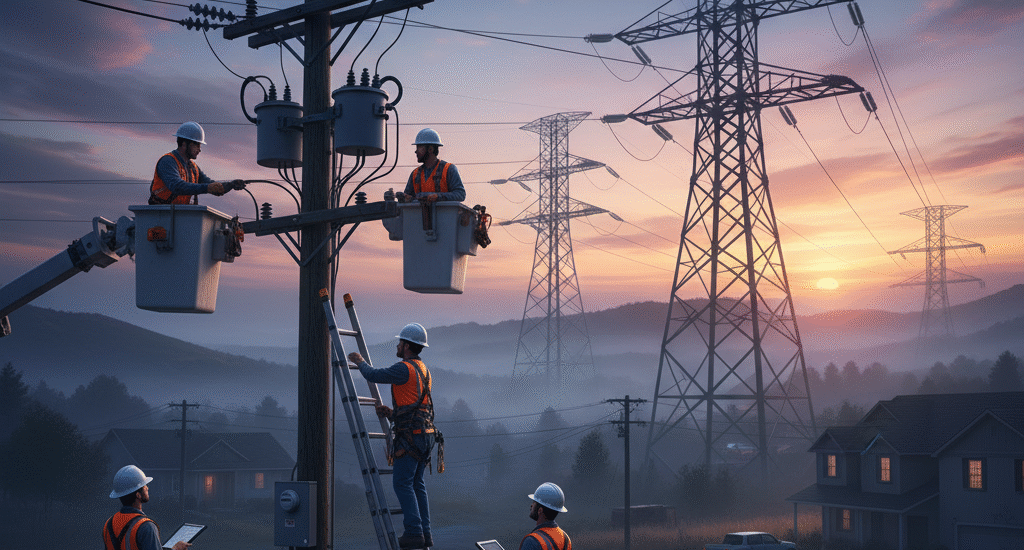
| Insulation & Clearances | Requires robust, specialized insulators (porcelain, polymer) to prevent arcing. Clearance distances from ground, buildings, and other lines must be precisely maintained to prevent flashovers. | Precision engineering for structural stability and adherence to high-voltage clearance norms. |
| Structural Integrity | Requires heavy-duty steel towers or robust poles (e.g., PCC poles) to support the weight and tension of long spans of cable. | Specialized civil works and foundation design for stability against wind load and seismic activity. |
| Protection Systems | Requires complex and fast-acting protection relays and Vacuum Circuit Breakers (VCBs) to isolate faults in milliseconds, protecting the entire grid segment. | Expertise in panel board integration and commissioning of advanced protection systems. |
Low-Tension (LT) Line Challenges
| Challenge Area | LT Line Requirements | HBCL Expertise |
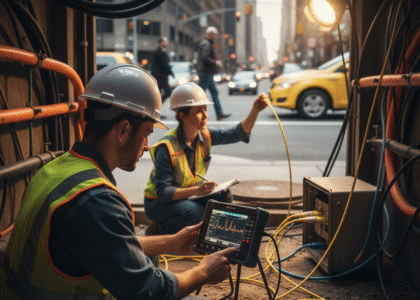
| Accessibility & Density | Lines are highly concentrated in urban areas, leading to challenges in maintaining safe clearance and avoiding existing utility infrastructure (especially in congested cities). | Meticulous route planning and coordination with civil authorities to minimize disruption. |
| Voltage Drop Management | Due to high current, LT lines suffer from greater voltage drop over distance, which can lead to poor power quality for consumers. | Optimal conductor sizing and strategic placement of distribution transformers to maintain mandated voltage levels. |
| Tapping & Connections | LT lines are the point of service connection, requiring clean, durable, and weatherproof tapping joints (using insulation-piercing connectors, etc.). | Use of superior quality cables, joints, and professional termination techniques to prevent local hotspots and failures. |
3. The HBCL Integrated Advantage
Handling an electrical project—whether it’s a dedicated 11kV line for a new factory or the distribution network for a residential colony—requires an integrated approach.
- Civil Works for HT: The HT challenge begins with civil construction; the tower or pole foundations must withstand enormous mechanical stress. HBCL ensures the civil structure is engineered to exceed the electrical requirements.
- Safety and Standards: All HT and LT works are executed strictly in accordance with national electrical safety codes and local utility standards.
- End-to-End Responsibility: By managing both High-Tension (transmission/primary distribution) and Low-Tension (final distribution) infrastructure, HBCL ensures a seamless transition of power from the grid to the final consumer.
Mastering both ends of the electrical spectrum is what ensures reliable power delivery and long-term asset health for our clients.
The video What Is Differentiate Between HT Line And LT Line | Low Tension Line And High Tension Line In Hindi
further explains the basic differences between high and low tension lines.